Bus dealers are rare and the decisions are technical. What a knowledgeable rep should be able to answer about gas versus diesel, CDL rules, and storage.
By Henry Headden - President and CEO
Published
This article was reviewed and updated on December 22, 2025.
Finding the right help when shopping for a bus
Shopping for shuttle buses can often leave buyers feeling frustrated or unsupported. Unlike the automotive market, where dealerships are on every corner, the commercial bus industry is a specialized niche.
There are relatively few dedicated sales facilities across the country. This makes it critical to find a partner who truly understands the unique needs of churches, senior care providers, and commercial operators.
If you are looking to purchase a bus for your organization, the first step is finding a knowledgeable and courteous transportation consultant.
Why industry expertise matters
Since bus dealerships are not as ubiquitous as car or truck lots, you, the customer, need to identify a reputable company. You need staff members who possess extensive technical knowledge of brands like Starcraft, Glaval, and Forest River.
Their role is not simply to sell a vehicle, but to guide you toward the specific configuration that serves your organization effectively.
The sales team at Carpenter Bus Sales has spent thousands of hours analyzing the bus industry and assisting customers nationwide. When you speak with a qualified bus specialist, the experience should leave you with three distinct assurances:
Genuine Care: The specialist demonstrates a clear understanding of your organization's mission and safety requirements.
Education: You receive education on specifications and regulations rather than just a sales pitch.
Simplicity: The specialist navigates the complexities of federal regulations, making the buying process simple.
2026
OCT
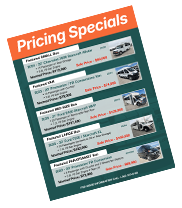
GET OUR MONTHLY PRICING SPECIALS TODAY!
Looking for our current deals?
Download our October pricing specials
Critical decisions: Gas vs. Diesel engines
A knowledgeable consultant will help you answer technical questions before you spend your budget. One of the most common questions involves the choice of powertrain.
Gasoline engines generally have a lower upfront acquisition cost and are often sufficient for organizations driving fewer than 15,000 miles per year.
Diesel engines, while more expensive initially, typically offer greater longevity and higher torque. This is often beneficial for larger buses or those operating in mountainous terrain.
Understanding CDL vs. Non-CDL requirements
Federal regulations determine who can legally operate your vehicle. A standard "Non-CDL" bus is generally defined as a vehicle designed to transport 15 or fewer passengers, including the driver.
If your organization requires a bus that carries 16 or more people, the driver must typically hold a Commercial Driver's License (CDL) with a Passenger (P) endorsement.
For more information on federal licensing standards, you can review guidelines from the Federal Motor Carrier Safety Administration (FMCSA).
Balancing rear storage and seating capacity
Do you need rear luggage storage? This is often overlooked until after a purchase is made. Adding a dedicated rear luggage area provides necessary space for airport shuttles, sports teams, or mission trips.
However, this storage area occupies space that would otherwise be used for seats. For example, adding a rear luggage wall might reduce a 15-passenger bus to a 12-passenger bus.
It is vital to balance your need for cargo space against your need for passenger capacity.
Accessibility and long-term support
Determining if you need a handicap-accessible bus is both a practical and legal consideration. Buses equipped with wheelchair lifts and tie-downs ensure that your ministry or service is inclusive.
Finally, a reputable dealership provides support long after the sale. Access to the right components is essential for minimizing downtime. For specific maintenance items, you can visit Carpenter Bus Parts to see components for various makes and models.
If you are in the market for a new or used bus, please let Carpenter Bus Sales help you find the right buses you need today. Feel free to call us at 1-800-370-6180.
Frequently Asked Questions
What is the difference between a CDL and a Non-CDL bus?
The distinction is primarily based on passenger capacity. According to federal law, any vehicle designed to transport 16 or more people (including the driver) requires a Commercial Driver's License (CDL) to operate.
Should I choose a gas or diesel engine?
Gasoline engines are less expensive upfront and ideal for low-mileage use. Diesel engines cost more initially but generally offer longer engine life and better torque, preferable for high-mileage fleets.
Does adding rear luggage storage reduce seat count?
Yes. A dedicated rear luggage compartment takes up interior floor space. Typically, adding a rear luggage wall reduces the seating capacity by one or two rows (3 to 4 seats).
Do I need a special license to drive a bus with a wheelchair lift?
Having a wheelchair lift alone does not determine the license requirement; the total passenger rating of the vehicle does. However, operators should be trained on the safe operation of the lift.
About the Carpenter Bus Sales Editorial Team
This article was prepared and reviewed by the Carpenter Bus Sales Editorial Team, drawing on decades of experience serving church, school, and organizational transportation needs nationwide. Carpenter Bus Sales has specialized in bus sales and service since 1953.
Learn more at CarpenterBus.com.
Download Your FreeBUS BUYING GUIDE
Expert tips to make your bus purchase simple and stress-free.