Small Buses for Sale
A small bus seats 15 people or fewer including the driver, which keeps it under the federal CDL limit. They are also called short buses or non-CDL buses.
Need help choosing? Read the capacity codes, CDL rules, and wheelchair configurations after the listings. Read the full decision guide after the listings
October Pricing Specials
- Only 5 units at this price
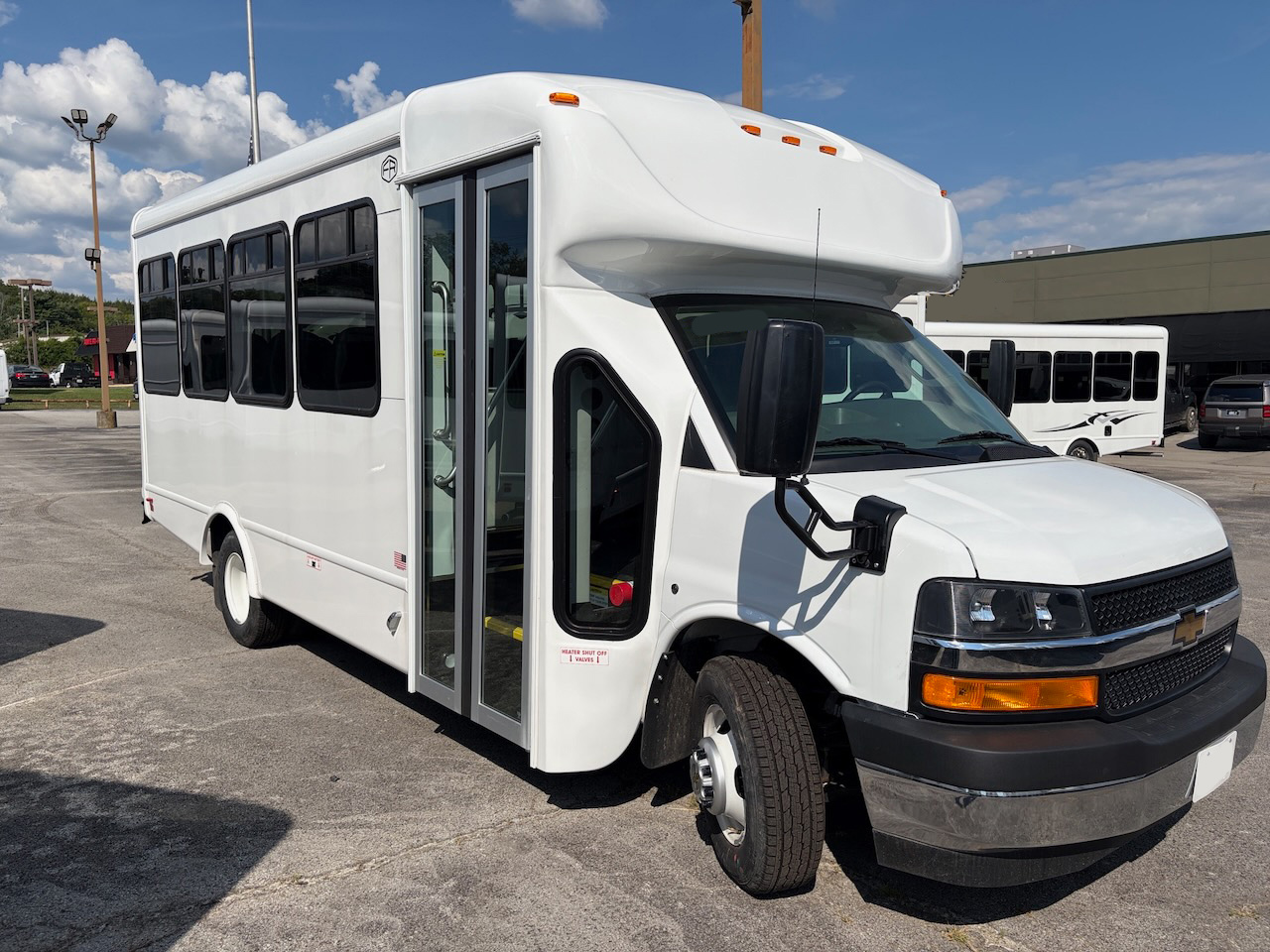
Condition: New
Capacity
15 RS
Engine
6.6L V-8 Gas
Status
In Stock
Category
Smaller
Stock
#26091
Mileage
800
Was $118,900
$106,900

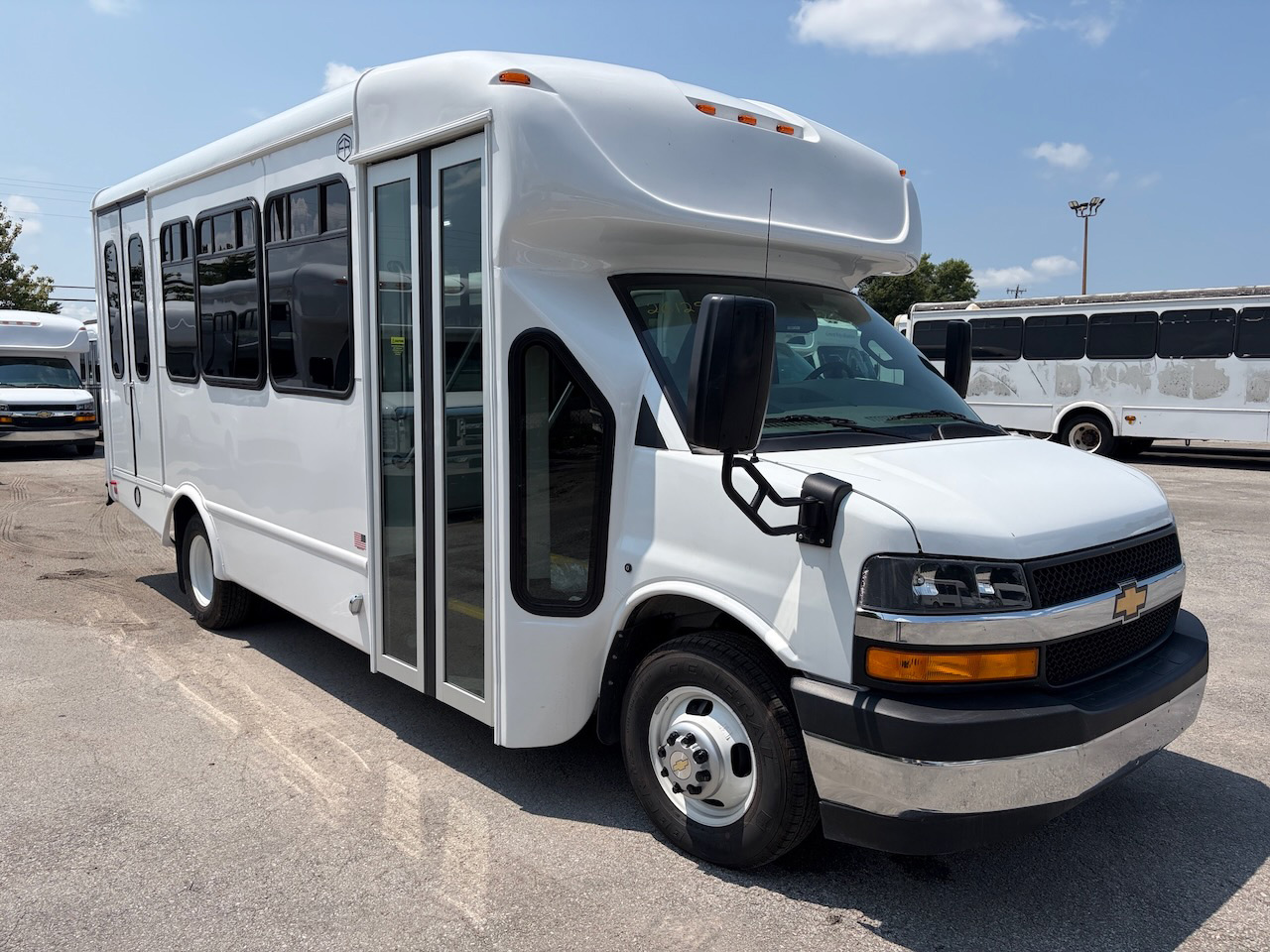
Condition: New
Capacity
13 +2WS (S)
Engine
6.6L V-8 Gas
Status
In Stock
Category
Smaller
Stock
#26130
Mileage
800
Was $125,900
$115,900

Condition: Used
Capacity
10 +2WS (S)
Engine
6.6L V-8 Gas
Status
Trade-In
Category
Smaller
Stock
#2617023
Mileage
53,000

Condition: Bargain Barn
Capacity
12 +2WS
Engine
3.7L V-6 Gas
Status
Trade-In
Category
Smaller
Stock
#2612517
Mileage
20,000

Not sure where to start? Get the Bus Buying Guide
- Sizing & capacity
- New vs. used
- Budget & financing

Condition: Used
Capacity
13 +2WS (D)
Engine
7.3L V-8 Gas
Status
Deal Pending
Category
Smaller
Stock
#2612322
Mileage
50,000

Condition: Used
Capacity
13 +2WS
Engine
6.8L V-10 Gas
Status
In Stock
Category
Smaller
Stock
#267417
Mileage
77,400
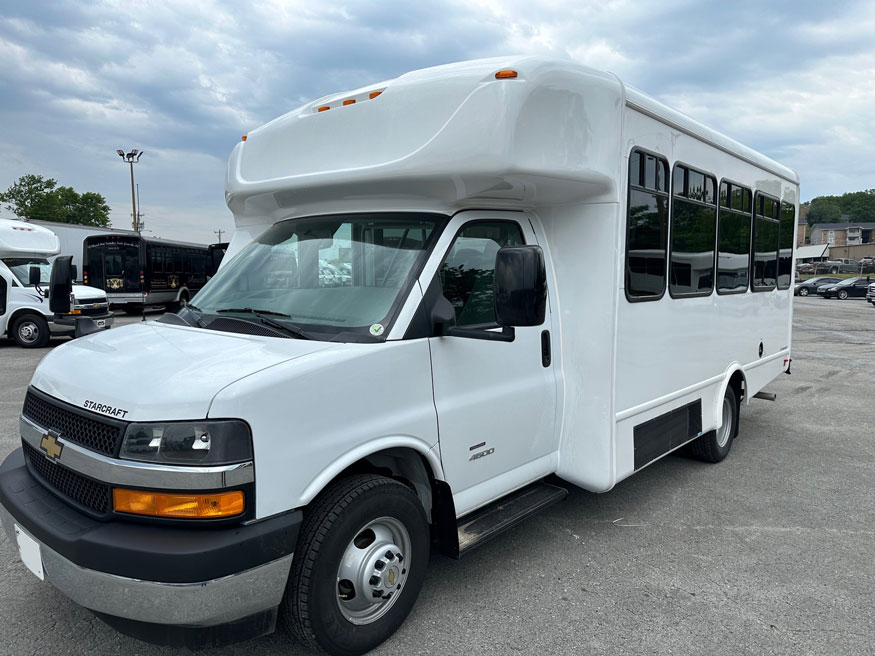
Condition: New
Capacity
15 CP-RSW
Engine
6.6L V-8 Gas
Status
Ordered
Category
Smaller
Stock
#26264
Mileage
0
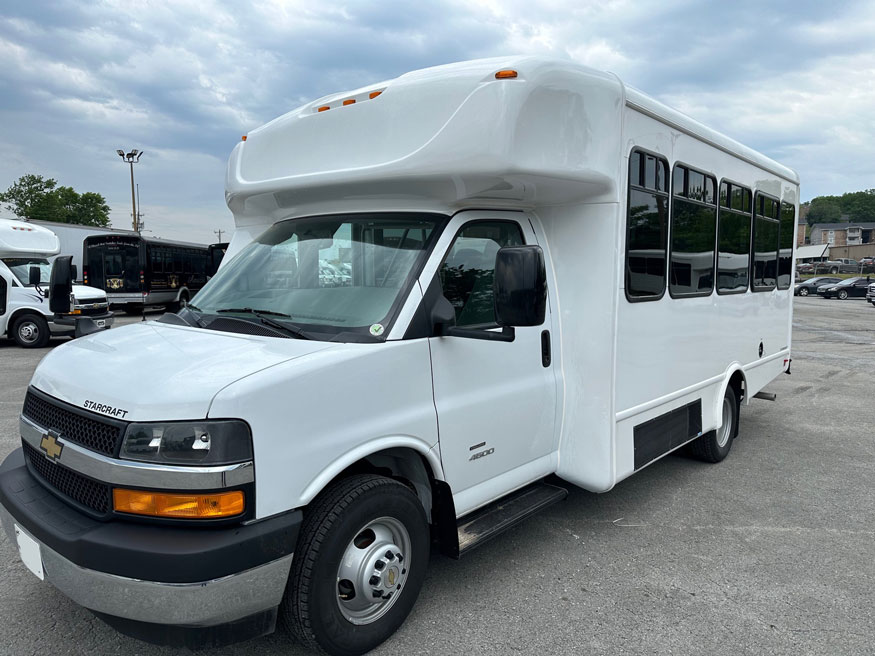
Condition: New
Capacity
15 CP-RSW
Engine
6.6L V-8 Gas
Status
Ready
Category
Smaller
Stock
#26057
Mileage
0
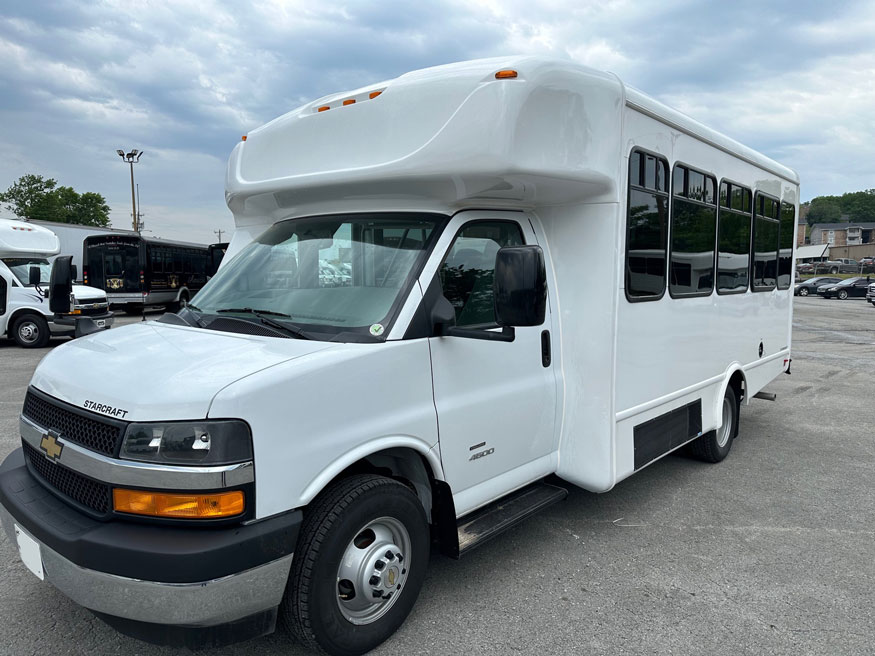
Condition: New
Capacity
15 CP-RSW
Engine
6.6L V-8 Gas
Status
In Stock
Category
Smaller
Stock
#26056
Mileage
800
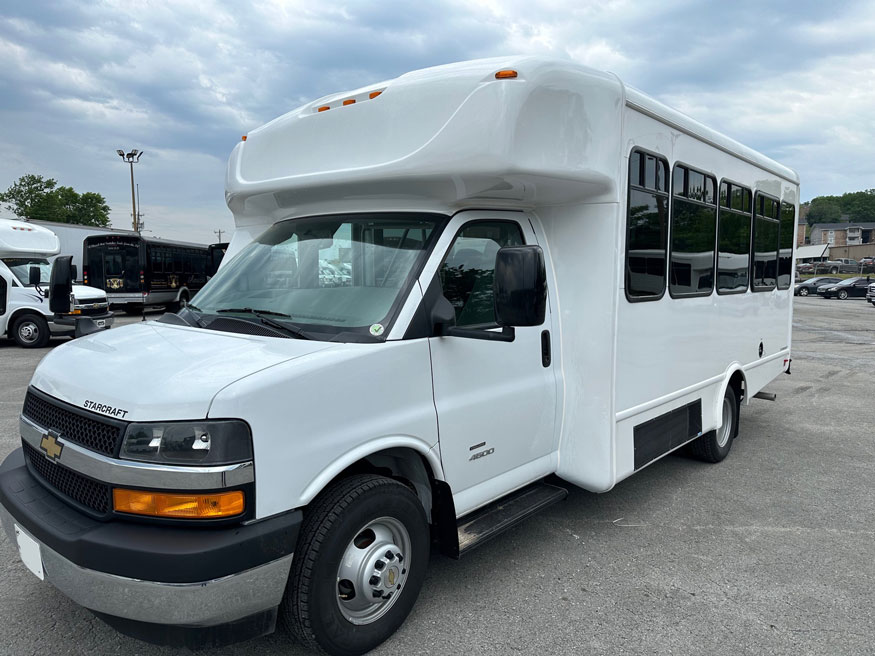
Condition: New
Capacity
15 CP-RSW
Engine
6.6L V-8 Gas
Status
Ready
Category
Smaller
Stock
#26055
Mileage
0
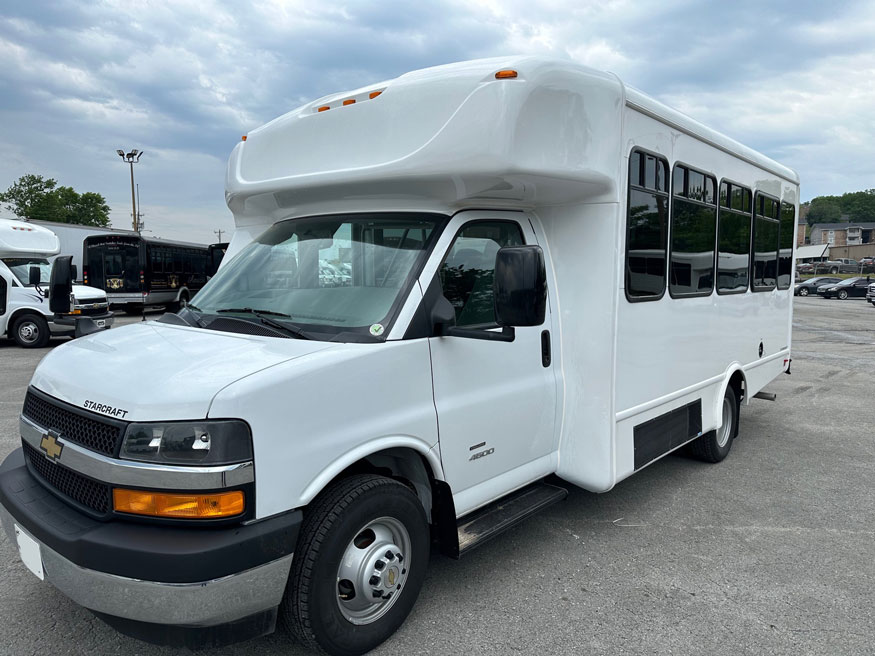
Condition: New
Capacity
15 CP-RSW
Engine
6.6L V-8 Gas
Status
In Stock
Category
Smaller
Stock
#26054
Mileage
1,200
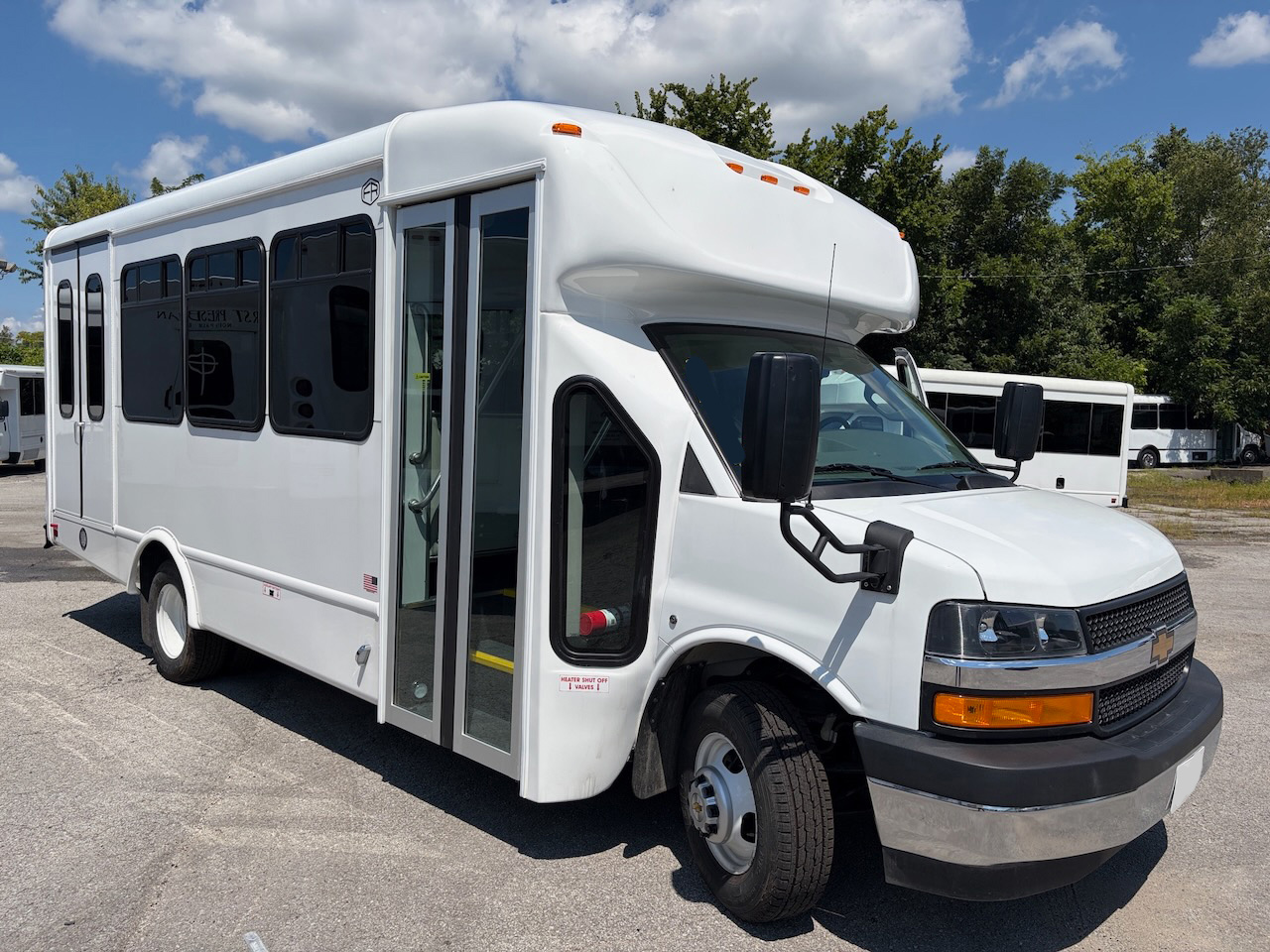
Condition: New
Capacity
13 +2WS/15 (D)
Engine
6.6L V-8 Gas
Status
Ordered
Category
Smaller
Stock
#26196
Mileage
0
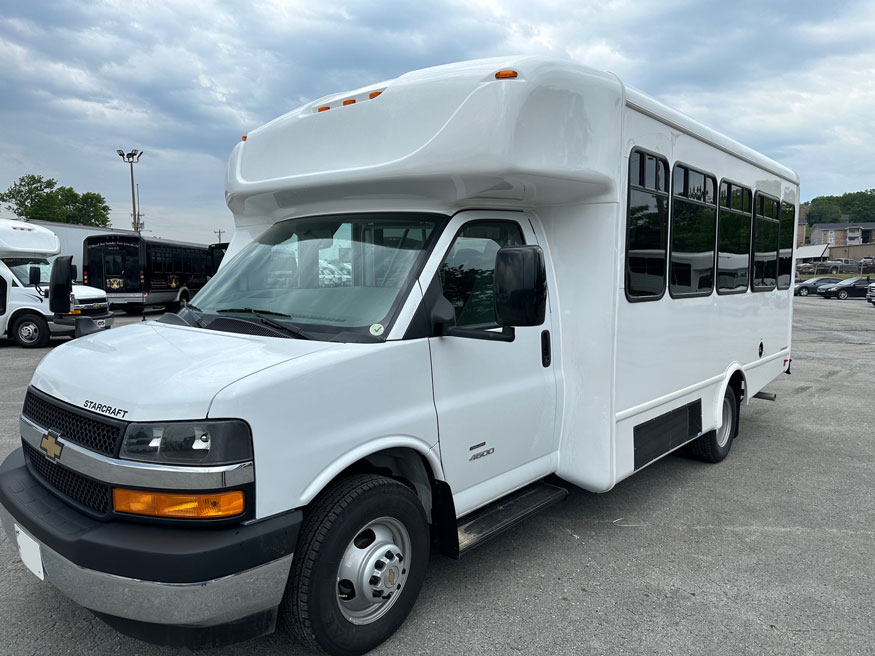
Condition: New
Capacity
15 CP-RSW
Engine
6.6L V-8 Gas
Status
Ordered
Category
Smaller
Stock
#26265
Mileage
0
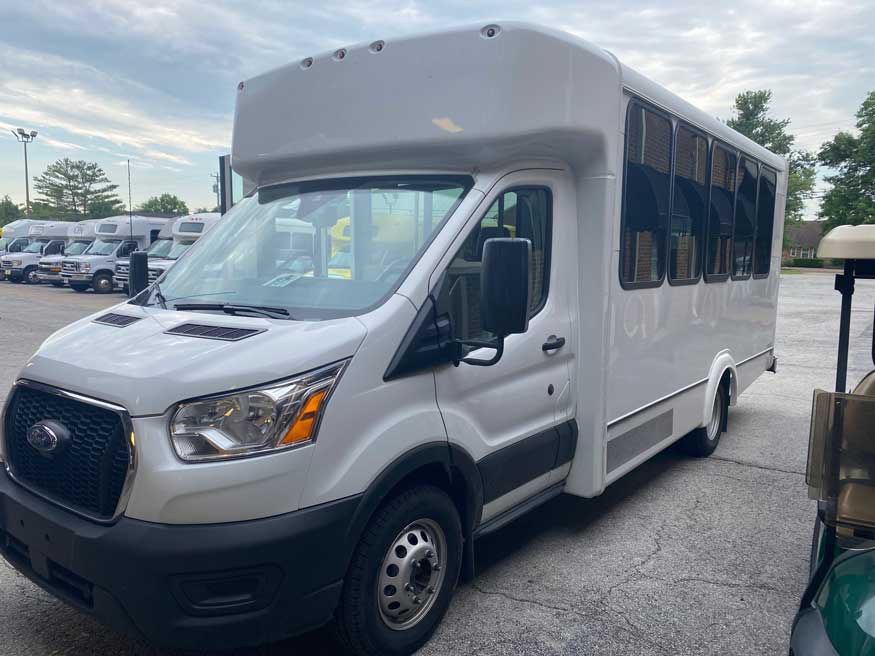
Condition: Used
Capacity
10 +1WS
Engine
3.5L V-6 Gas
Status
Trade-In
Category
Smaller
Stock
#2616920
Mileage
107,000
Condition: New
Capacity
15 RS
Engine
6.6L V-8 Gas
Status
In Stock
Category
Smaller
Stock
#26091
Mileage
800
Was $118,900
$106,900
Condition: New
Capacity
13 +2WS (S)
Engine
6.6L V-8 Gas
Status
In Stock
Category
Smaller
Stock
#26130
Mileage
800
Was $125,900
$115,900
Condition: Used
Capacity
10 +2WS (S)
Engine
6.6L V-8 Gas
Status
Trade-In
Category
Smaller
Stock
#2617023
Mileage
53,000
Condition: Bargain Barn
Capacity
12 +2WS
Engine
3.7L V-6 Gas
Status
Trade-In
Category
Smaller
Stock
#2612517
Mileage
20,000
Not sure where to start? Get the Bus Buying Guide
- Sizing & capacity
- New vs. used
- Budget & financing
Condition: Used
Capacity
13 +2WS (D)
Engine
7.3L V-8 Gas
Status
Deal Pending
Category
Smaller
Stock
#2612322
Mileage
50,000
Condition: Used
Capacity
13 +2WS
Engine
6.8L V-10 Gas
Status
In Stock
Category
Smaller
Stock
#267417
Mileage
77,400
Condition: New
Capacity
15 CP-RSW
Engine
6.6L V-8 Gas
Status
Ordered
Category
Smaller
Stock
#26264
Mileage
0
Condition: New
Capacity
15 CP-RSW
Engine
6.6L V-8 Gas
Status
Ready
Category
Smaller
Stock
#26057
Mileage
0
Condition: New
Capacity
15 CP-RSW
Engine
6.6L V-8 Gas
Status
In Stock
Category
Smaller
Stock
#26056
Mileage
800
Condition: New
Capacity
15 CP-RSW
Engine
6.6L V-8 Gas
Status
Ready
Category
Smaller
Stock
#26055
Mileage
0
Condition: New
Capacity
15 CP-RSW
Engine
6.6L V-8 Gas
Status
In Stock
Category
Smaller
Stock
#26054
Mileage
1,200
Condition: New
Capacity
13 +2WS/15 (D)
Engine
6.6L V-8 Gas
Status
Ordered
Category
Smaller
Stock
#26196
Mileage
0
Condition: New
Capacity
15 CP-RSW
Engine
6.6L V-8 Gas
Status
Ordered
Category
Smaller
Stock
#26265
Mileage
0
Condition: Used
Capacity
10 +1WS
Engine
3.5L V-6 Gas
Status
Trade-In
Category
Smaller
Stock
#2616920
Mileage
107,000
Page 1 of 9
Choosing a Small Bus
Small buses are the largest part of what we sell. Since 2022 they have accounted for roughly two thirds of every unit that has left our lots. Most of that volume comes down to three decisions: how many people you need to seat, whether any of them use a wheelchair, and whether your driver needs a CDL. The rest is trim.
Who buys small buses, and how they configure them
These figures come from our own delivery records, not from industry averages.
| Organization | Bought a small bus | Bought a wheelchair bus | What usually decides it |
|---|---|---|---|
| Churches and ministries | 73% | 18% | Volunteer drivers. Most churches want a bus anyone on the roster can legally drive, which keeps them under the CDL threshold. |
| Senior living and assisted living | 95% | 87% | Wheelchair access, almost without exception. Nearly every senior care bus we deliver is built with a lift and wheelchair stations. |
| Schools, daycares and childcare | 59% | 5% | Route size and title type. Schools split between small buses for activity runs and larger units for daily routes, and often need an MFSAB title. |
| Shuttle and parking operators | 64% | 26% | Turnaround time and luggage. Perimeter seating and a rear storage wall matter more here than raw seat count. |
| Fleet and leasing accounts | 84% | 61% | Resale and standardization. Fleets tend to spec accessible units because they widen the pool of end users a bus can serve. |
Will your driver need a CDL?
Two things can push a bus into CDL territory: a gross vehicle weight rating (GVWR) of 26,001 lbs or more, or a design capacity of 16 or more people including the driver. Small buses are built on four chassis, and every one of them sits well under the weight line.
| Chassis | GVWR | Under the 26,001 lb CDL line? | Typical use |
|---|---|---|---|
| Chevrolet 3500 | 12,300 lbs | Yes | Lighter builds, shorter bodies |
| Ford E350 | 12,500 lbs | Yes | Lighter builds, shorter bodies |
| Chevrolet 4500 | 14,200 lbs | Yes | Heavier builds, lifts, more storage |
| Ford E450 | 14,500 lbs | Yes | Heavier builds, lifts, more storage |
So on a small bus, weight is never the deciding factor. Seat count is. A vehicle designed to carry 15 or fewer passengers including the driver does not require a Commercial Driver's License under federal law, which is why most of the buses on this page can be driven by a volunteer, an aide or an activities director without a license upgrade. When we say 15 passenger, we mean 15 people in the bus in total, so plan on 14 riders plus your driver.
California is stricter than the federal minimum. Check with your state DMV before you assign a driver, and ask your rep to confirm the exact seating configuration on the specific unit you are considering.
We can build a 15 passenger bus on any of these four chassis, so two units with the same seat count can sit on very different platforms depending on how much lift, storage and body length you need.
Already own a bus that needs a CDL and wish it didn't? We convert CDL buses to non-CDL.
How to read the capacity code on a listing
Every bus above shows a capacity code such as 15 RSW or 13 +2WS. The leading number is total seated capacity including the driver, so a 15 seats 14 riders and the person behind the wheel. The letters describe how the interior is laid out.
| Code | Means | Why it matters |
|---|---|---|
| WS | Wheelchair station | Each station is a securement position. "13 +2WS" seats 13 and secures 2 wheelchairs. |
| RS | Rear storage, no wall | Open storage at the back. Bags stay in the cabin, so nothing separates them from passengers. |
| RSW | Rear storage with wall | A partition between the seats and the storage bay. The most common small bus layout we sell. |
| CP | Co-pilot seat | A forward passenger seat beside the driver. Useful when an aide or chaperone rides up front. |
| PS | Perimeter seating | Seats along the walls instead of in rows. Faster loading and unloading on short shuttle runs. |
| RR | Rear ramp | Wheelchair access at the back rather than the side. Changes where you need clear space to park. |
| LR | Luggage rack | Overhead storage inside the cabin, for shorter items that do not need the rear bay. |
| RRR | Removable rear row | The back row lifts out, so you can trade seats for cargo space on the days you need it. |
| E | Economy trim | Entry level seating fabric and no overhead luggage. The lowest cost way into a given floor plan. |
| (S) | Standard trim | Our most common specification. A code with no trim letter at all is also a standard build. |
| (D) | Deluxe trim | Overhead storage, upgraded seating and rear flip down seats. Worth it on longer runs. |
Reading a code with a slash
A slash means the same bus runs two ways. 13 +2WS/15 is 13 seats with 2 wheelchair stations, or 15 seats with the stations stowed. On larger units you will see the same idea applied to storage: 33 /29 RS means 33 seats, or 29 seats and a rear storage area once the back two foldaway seats are up. If your passenger mix changes from one day to the next, these convertible units are the ones worth shortlisting.
If you need wheelchair access
About a third of all the buses we deliver are built with at least one wheelchair station, and the configuration is remarkably consistent: 88% of our accessible units are ordered with exactly two stations. Two is the practical default because it covers the common case without giving up more ambulatory seats than an organization can spare. If you need three or more, say so early, because it changes the floor plan, the chassis and often the lead time. Browse wheelchair accessible buses.
What warranty comes with a small bus
Every new bus we sell includes SilverCare at no cost, covering the entire vehicle, bumper to bumper, for 5 years or 60,000 miles. That is the floor, and it applies to everyone.
Churches and senior care communities get PlatinumCare instead, also free. That is 8 years, unlimited miles, bumper to bumper on the whole vehicle. Adult day care operations are not eligible for PlatinumCare. Anyone who wants more than the base tier but does not qualify for PlatinumCare can add GoldCare for $800, which extends that coverage to 7 years or 70,000 miles.
| Coverage | Cost | Length | What it covers | Who gets it |
|---|---|---|---|---|
| SilverCare | Free | 5 yr / 60,000 mi | Entire vehicle, bumper to bumper | Every new bus |
| GoldCare | $800 | 7 yr / 70,000 mi | Entire vehicle, bumper to bumper | Anyone who adds it |
| PlatinumCare | Free | 8 yr / unlimited mi | Entire vehicle, bumper to bumper | Churches and senior care communities |
Churches buy a small bus 73% of the time and senior living communities 95% of the time, so most of the buyers who qualify for PlatinumCare are shopping in exactly this size class. If you are a church or a senior living community looking at a 15 passenger bus, the unlimited mile coverage is already included in the price you are quoted.
Not quite the right size?
Mid Size Buses, 16 to 28 passengers
Where shuttle and charter operators land most often. Step up here when a full load will not fit a small bus but a 30 seat unit is more than you need.
Large Buses, 29 passengers and up
The choice for daily school routes and tour work. Expect a CDL requirement and plan your driver roster around it.
Wheelchair Accessible Buses
Every accessible unit in stock, small and large. The default starting point for senior living and assisted living buyers.
Activity Buses (MFSAB)
For schools, daycares and youth programs that need a school activity title rather than a standard bus title.
Vans and Wheelchair Vans
Smaller than a bus and easier to park. Worth a look if you are moving fewer than eight people at a time.
Used Buses
New bus prices roughly doubled since 2022. A well kept used unit is now the shortest route to a bus for a lot of budgets.