
25 Passenger Bus: The Complete Guide for Buyers
The most seats you can get on an E-450 or 4500 chassis, and why the cost-per-seat math makes this the best value in the entire shuttle market.
By Dominic Menard - National Director of Marketing & Technology
Published
A 25 passenger bus is the largest bus you can get on a standard Ford E-450 or Chevrolet 4500 cutaway chassis — and for many organizations, it represents the best value in the entire shuttle bus market. Why? Because for a relatively small increase in price over a 15 or 20 passenger bus, you gain the ability to transport up to 25 people on a single vehicle. That dramatically lowers your cost per seat over the life of the bus.
The 25 passenger bus sits at a sweet spot: big enough to handle growing congregations, full athletic rosters, busy hotel shuttle routes, and large senior living communities — but still compact enough to park in most standard lots and maneuver through neighborhoods and urban streets. It does require a Commercial Driver's License (CDL) with a Passenger endorsement, but organizations that already operate a 20 passenger bus will find the step up to 25 passengers requires no additional licensing or chassis investment.
This guide covers everything you need to know before buying a 25 passenger bus: what it is, why it's the most cost-effective seat count in its chassis class, CDL requirements, how it compares to 20 and 30 passenger buses, safety features, popular models and specs, cost factors, insurance, financing, and maintenance.
Want the short version? Download our free Bus Buying Guide using the form on this page — it's a quick, printable reference you can share with your team.
The Quick Version (TL;DR)
Short on time? Here are the key facts about 25 passenger buses:
- What it is: The maximum-capacity configuration on a Ford E-450 or Chevrolet 4500 cutaway chassis. A purpose-built bus body carries 24 seated passengers plus the driver.
- CDL required? Yes. Any vehicle designed to carry 16 or more passengers (including the driver) requires a CDL with a Passenger (P) endorsement.
- Best value in the class? Yes. A 25 passenger bus is built on the same chassis as a 20 passenger bus — but you get 5 more seats for a minimal increase in cost. Your cost per seat drops significantly.
- Who buys them? Churches, schools, universities, senior living communities, hotels, corporate campuses, camps, tour operators, and government agencies.
- Popular models: Starcraft Allstar, Glaval Universal, and Glaval Titan II. Available on Ford and Chevy chassis platforms.
- How long is a 25 passenger bus? Approximately 25 feet, depending on the model and manufacturer.
- How much does a 25 passenger bus weigh? The typical GVWR is 14,200 to 14,500 pounds, depending on the chassis.
- Cost: Varies by new vs. used, chassis, manufacturer, configuration, and options. Call Carpenter Bus Sales at 800-370-6180 for a current quote.
- Financing: Available through Carpenter Bus Sales with competitive fixed rates for both new and used buses.
- Warranty: Carpenter Bus Sales includes SilverCare free, a 5-year or 60,000-mile plan.
Read on for the full details, or call us at 800-370-6180 to talk to a bus specialist who can answer your specific questions right now.
What Is a 25 Passenger Bus?
A 25 passenger bus is a purpose-built shuttle bus constructed on a commercial cutaway chassis — most commonly the Ford E-450 or Chevrolet 4500 — with a bus body engineered to carry 24 seated passengers plus the driver at maximum capacity.
This is the largest passenger count you can achieve on the E-450 or 4500 chassis platform. Manufacturers like Starcraft and Glaval build these buses by extending the chassis frame beyond its original factory length (typically to a 190-inch wheelbase) and mounting a longer bus body — approximately 25 feet — to accommodate the additional rows of seating.
The 25 passenger bus uses the same fundamental platform as the 20 passenger bus. The difference is interior layout: where a 20 passenger configuration uses fewer seats to create luggage space or extra legroom, the 25 passenger configuration maximizes every available seat position. Both share the same engine, drivetrain, chassis frame, safety systems, and exterior dimensions (width and height) — the 25 passenger version is simply longer.
Typical dimensions for a 25 passenger bus are approximately 25 feet in length, 96 inches (8 feet) in width, and 115 to 116 inches in overall height. The interior offers a 93-inch floor width, 80-inch floor-to-ceiling height, a full center aisle with 2+2 seating, and standing headroom throughout the cabin.
You may hear a 25 passenger bus referred to as a mid-size shuttle bus, a medium-duty bus, or simply a "25-pax bus." All describe the same vehicle: the maximum-capacity configuration on the E-450 or 4500 cutaway chassis.
The Cost-Per-Seat Advantage of a 25 Passenger Bus
This is the single biggest reason organizations choose a 25 passenger bus over a smaller model: the math.
A 25 passenger bus and a 15 passenger bus are built on closely related chassis platforms (the E-450 is one step up from the E-350). The 25 passenger version costs more — but not proportionally more. You're paying a modest premium for a longer body and additional seats, but your cost per seat drops dramatically compared to a 15 or even 20 passenger bus.
Think of it this way: if you're paying for the chassis, engine, drivetrain, safety systems, and bus body regardless — why not get the maximum number of seats that platform can carry? For organizations that regularly fill a 15 passenger bus to capacity, the 25 passenger bus means you can serve your entire group in one trip instead of two, with one driver instead of two, burning one tank of fuel instead of two.
Over the 10 to 15 year life of a bus, that cost-per-seat advantage adds up to tens of thousands of dollars in savings.
Of course, the 25 passenger bus does require a CDL — which a 15 passenger bus does not. For organizations that already have CDL-certified drivers, or are willing to invest in getting them certified, the 25 passenger bus is the clear value play.
Do You Need a CDL to Drive a 25 Passenger Bus?
Yes. A CDL with a Passenger (P) endorsement is required.
Under federal law, a Commercial Driver's License is required for any vehicle designed to carry 16 or more passengers, including the driver. A 25 passenger bus — which carries 24 passengers plus 1 driver — well exceeds that threshold.
Important: the CDL requirement is based on the vehicle's design capacity, not the number of people currently on board. If your bus has 25 seats, you need a CDL to drive it even if it's empty. You cannot avoid the CDL by simply leaving seats unoccupied.
Obtaining a CDL with a Passenger endorsement requires passing a written knowledge test and a driving skills test in a representative vehicle. Many churches and organizations successfully sponsor their staff or volunteers to get certified. Your state's Department of Motor Vehicles can provide specific testing requirements and locations.
Some states have additional requirements beyond the federal standard. Always check with your state's DMV to confirm what applies to your situation.
How Does a 25 Passenger Bus Compare to Other Sizes?
The 25 passenger bus sits between the 15 passenger non-CDL bus and the 30 passenger bus, which moves to a heavier-duty chassis. Here's how the sizes compare:
| Feature | 15 Passenger Bus | 20 Passenger Bus | 25 Passenger Bus | 30 Passenger Bus |
|---|---|---|---|---|
| Passenger capacity | Up to 15 (incl. driver) | Up to 20 (incl. driver) | Up to 25 (incl. driver) | Up to 30 (incl. driver) |
| CDL required? | No | Yes | Yes | Yes |
| Typical chassis | Ford E-350/E-450, GM 3500/4500 | Ford E-450, GM 4500 | Ford E-450, GM 4500 | Ford F-550 |
| Bus length | 20' – 25' | 22' – 25' | 25' | 28' – 32' |
| GVWR | 10,000 – 14,500 lbs | 14,500 lbs | 14,500 lbs | 19,500 lbs |
| Engine | 7.3L Gas (Ford) / 6.6L Gas (GM) | 7.3L Gas (Ford) / 6.6L Gas (GM) | 7.3L Gas (Ford) / 6.6L Gas (GM) | 7.3L Gas or 6.7L Diesel (Ford) |
| Dedicated luggage area | Yes (most models) | Yes (interior or rear) | Trade seats for luggage | Yes (most models) |
| Same chassis as 25 pax? | Partially (E-450 models) | Yes — same chassis | — | No — steps up to F-550 |
Key takeaway: The 25 passenger bus gives you the most seats possible before you have to step up to the heavier, longer, and more expensive F-550 chassis class. If you need more than 25 passengers, you're looking at a 30 passenger bus — which is a different vehicle entirely. [Explore our 30 passenger buses here.]
If you don't need all 25 seats and want dedicated luggage space on the same chassis, the 20 passenger bus is the right configuration. [Explore our 20 passenger buses here.]
If you want to avoid the CDL requirement entirely, the 15 passenger bus keeps you under the federal threshold. [Explore our 15 passenger buses here.]
Safety Features of a 25 Passenger Bus
The 25 passenger bus includes the full suite of safety features standard across all Starcraft and Glaval shuttle buses built on the E-450 and 4500 chassis.
Dual Rear Wheels (DRW). Four tires across the rear axle create a wide stance that lowers the center of gravity and significantly reduces rollover risk.
Fully Welded Steel Cage Construction. Both Starcraft and Glaval build their bus bodies with a fully welded steel cage frame — meeting all applicable FMVSS requirements — that provides structural protection in the event of a collision.
Multiple Emergency Exits. Rear emergency door, push-out emergency windows, and a roof hatch on most models ensure passengers can evacuate quickly in an emergency.
Backup Camera. Standard on all current Starcraft and Glaval models. The Glaval Universal and Titan II include a 7-inch monitor/rearview mirror combo for enhanced visibility.
LED Lighting. Sealed LED stop, tail, turn signal, and marker lights improve visibility to other drivers in all weather and lighting conditions.
Breakaway Mirrors with Convex. Wide-angle mirrors provide the driver with maximum visibility of traffic, pedestrians, and obstacles alongside the bus.
FMVSS Compliance. Built to Federal Motor Vehicle Safety Standards including requirements for structural integrity, seating anchorage, fuel system integrity, and occupant crash protection — the same standards that govern yellow school buses.
ADA Accessibility. The 25 passenger chassis can be configured with fewer seats and wheelchair lifts, foldaway seats, and securement systems for organizations that need to accommodate passengers with mobility needs.
Comfort and Interior Features
The 25 passenger bus offers the same cabin quality and features as its 20 passenger sibling — because it's built on the same platform.
93-Inch Interior Width. A spacious cabin with a comfortable center aisle and 2+2 seating throughout.
80-Inch Interior Height. Full standing headroom for easy movement throughout the cabin.
Seat Track System. Floor and wall seat tracks allow for future reconfiguration if your needs change — seats can be repositioned, removed, or replaced with wheelchair stations.
Climate Control. Front and rear heating and air conditioning keep the cabin comfortable year-round. Rear HVAC is available as standard or optional depending on the model.
LED Interior Lighting. Driver and passenger area LED lighting plus entry door step well lights for safe boarding.
Commercial-Grade Flooring. Slip-resistant Gerflor flooring (Glaval) or exterior-grade plywood with rubber aisle covering (Starcraft) stands up to heavy daily use.
Optional Upgrades. Overhead luggage racks with reading lights, USB charging ports, PA systems, mid-back or high-back seating, padded vinyl or cloth walls and ceiling, audio and video systems, custom paint and graphics.
Note on luggage: Because the 25 passenger configuration maximizes seating, there is no dedicated luggage area in the standard layout. If your organization needs luggage space, you have two options: (1) add overhead luggage racks, or (2) choose a 20 or 21 passenger configuration on the same chassis that includes a rear or interior luggage area.
Popular 25 Passenger Bus Models
Carpenter Bus Sales carries 25 passenger buses from Starcraft and Glaval. All three models below are built on the same chassis class and offer the same 25 passenger maximum capacity — the differences are in manufacturer, chassis brand, and standard features.
Starcraft Allstar (Ford E-450)
The best-selling shuttle bus in the market, configured for maximum capacity on the Ford E-450 chassis.
- Chassis: Ford E-450
- Engine: 7.3L Gas V8
- Passenger capacity: 25 passengers + driver (max); also available in 21 w/rear luggage, 20 w/interior luggage, and 16 + 2 wheelchair configurations
- Bus length: 25'
- Wheelbase: 190"
- GVWR: 14,500 lbs
- Interior width: 93" | Interior height: 80"
- Key features: Fully welded steel cage construction, dual rear wheels, backup camera, LED lighting throughout, electric entry door with full-length glass, floor and wall seat track, "Starview" driver visibility window, one-piece FRP roof, breakaway mirrors with convex, exterior graphics package
- Best for: Churches, schools, universities, camps, corporate shuttles — any organization that wants maximum capacity on a proven Ford platform
Glaval Universal (Ford E-450)
Glaval's flagship mid-size bus, offering the same 25 passenger capacity with premium standard features and enhanced durability.
- Chassis: Ford E-450
- Engine: 7.3L Gas V8
- Passenger capacity: 25 passengers + driver (max); also available in 21 w/rear luggage, 20 w/interior luggage, and 12 or 16 + 2 wheelchair configurations
- Bus length: 25'
- Wheelbase: 190"
- GVWR: 14,500 lbs
- Interior width: 93" | Interior height: 80"
- Key features: Fully welded corrosion-preventative aluminized steel cage, laminated sidewall structure, 5/8" marine tech plywood flooring, Gerflor slip-resistant flooring with coved edges, backup camera with 7" monitor/rearview mirror combo, FlexTech electrical system, LED lighting, USB charging ports available, gray padded vinyl or cloth interior, molded wheel flares
- Best for: Hotels, corporate campuses, senior living communities, tour operators — organizations that value premium build quality and a polished appearance
Glaval Titan II (Chevrolet 4500)
The Chevy alternative to the Ford-based models, offering the same capacity and features on GM's 4500 platform.
- Chassis: GM 4500
- Engine: 6.6L Gas V8
- Passenger capacity: 25 passengers + driver (max); also available in 21 w/rear luggage, 20 w/interior luggage, and 12 or 16 + 2 wheelchair configurations
- Bus length: 25'
- Wheelbase: 177"
- GVWR: 14,200 lbs
- Interior width: 93" | Interior height: 80"
- Key features: Fully welded corrosion-preventative aluminized steel cage, laminated sidewalls, 5/8" marine-grade plywood flooring, Gerflor slip-resistant flooring with coved edges, backup camera with 7" monitor/rearview mirror combo, FlexTech electrical system, LED lighting, molded wheel flares, street-side exhaust, full chassis undercoating
- Best for: Organizations that prefer the Chevrolet platform, government fleets, senior living communities — any buyer standardizing on GM vehicles
25 Passenger Bus Configuration & Capacity Comparison
| Model | Chassis | Max Capacity | Engine | Bus Length | GVWR | CDL Required? |
|---|---|---|---|---|---|---|
| Starcraft Allstar | Ford E-450 | 25 + driver | 7.3L Gas | 25' | 14,500 lbs | Yes |
| Glaval Universal | Ford E-450 | 25 + driver | 7.3L Gas | 25' | 14,500 lbs | Yes |
| Glaval Titan II | GM 4500 | 25 + driver | 6.6L Gas | 25' | 14,200 lbs | Yes |
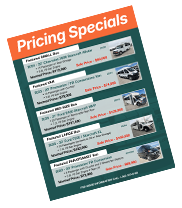
All three models can also be configured for 20 passengers with luggage, 21 passengers with rear luggage, or 16 passengers + 2 wheelchair positions — all on the same chassis.
[Explore Our 25 Passenger Bus Inventory →]
How Much Does a 25 Passenger Bus Cost?
The cost of a 25 passenger bus varies based on several factors. Because prices change frequently with chassis availability, manufacturer pricing, and market conditions, we recommend contacting a dealer directly for a current quote.
Here are the key factors that influence pricing:
New vs. Used. A new 25 passenger bus will cost more than a pre-owned one. Carpenter Bus Sales carries both, and every used bus is inspected and reconditioned before delivery. A well-maintained used 25 passenger bus can be an excellent value — especially for organizations buying their first CDL-class vehicle.
Chassis Platform. The Ford E-450 and Chevrolet 4500 carry different price points based on engine options, availability, and current market conditions.
Body Manufacturer. Starcraft and Glaval offer different levels of standard equipment and build materials. The Glaval models include marine-grade plywood, Gerflor flooring, and a backup camera with monitor as standard — which may reduce the need for add-on options.
Configuration. A 25 passenger maximum-capacity layout typically costs less than a wheelchair-accessible configuration with a lift and securement systems.
Interior Options. Mid-back or high-back seating, overhead luggage racks, rear HVAC, USB ports, PA systems, custom paint, and graphics all affect the final price.
Financing is available. Carpenter Bus Sales offers competitive financing with fixed rates for both new and used buses. Call us at 800-370-6180 to discuss your options.
Who Buys a 25 Passenger Bus?
The 25 passenger bus is one of the most versatile and cost-effective vehicles in the shuttle bus market. Here are the most common buyers.
Churches and Religious Organizations. The 25 passenger bus is the next logical step for growing churches that have outgrown a 15 passenger vehicle. It carries enough members for Sunday services, midweek programs, youth retreats, mission trips, and community outreach — all in a single vehicle. The cost-per-seat advantage over a smaller bus makes it a smart long-term investment for congregations that are still growing.
Schools and Universities. The 25 passenger bus is a workhorse for private schools and university transportation departments. Athletic teams, academic clubs, debate squads, band programs, and student organizations all benefit from the maximum capacity. For schools that already maintain CDL drivers on staff, the 25 passenger bus is the most efficient use of that credential.
Senior Living and Healthcare. Assisted living facilities and healthcare providers transport residents to appointments, outings, and activities daily. The 25 passenger bus accommodates a full activity bus load, and the wheelchair-accessible configurations (16 + 2 WC) serve communities with mixed mobility needs.
Hotels and Hospitality. Hotels, resorts, and convention centers use 25 passenger buses for airport shuttles, guest excursions, and event transportation. The higher capacity means fewer trips and faster turnaround at busy pickup points.
Corporate and Employee Shuttles. Companies with campus shuttle routes or employee commuting programs benefit from the 25 passenger bus's ability to move more people per trip — reducing fleet size, fuel costs, and driver requirements.
Tour Operators. Small tour companies and excursion operators use 25 passenger buses for city tours, winery tours, and group outings. The compact size allows access to venues and streets that larger coaches cannot navigate.
Government and Municipalities. Parks departments, transit agencies, and community organizations use 25 passenger buses for shuttle routes, park programs, and specialized transportation services.
Renting vs. Buying a 25 Passenger Bus
If you only need a 25 passenger bus a few times a year, renting may be the right choice. Carpenter Bus Sales has a rental department that can help with short-term bus rentals. Contact our rental team to check availability and rates.
If you use a bus regularly, buying is almost always more cost-effective. You avoid per-trip rental fees, the bus is available on your schedule, and you can customize it to your exact needs. Over the 10 to 15 year life of the vehicle, ownership costs far less than repeated rentals.
Carpenter Bus Sales offers both new and used buses along with financing to spread out the cost. Give us a call at 800-370-6180 and we can help you evaluate your options.
Insurance for a 25 Passenger Bus
Insurance premiums for a 25 passenger bus will vary depending on how the vehicle is used, the number of drivers, driver records, the state where the vehicle is registered, and coverage limits. Because the bus requires a CDL and carries more than 15 passengers, carriers will classify it as a commercial vehicle.
We recommend getting quotes from multiple providers that specialize in commercial or organizational vehicle coverage. The strong safety record of purpose-built shuttle buses — with their welded steel cage construction, dual rear wheels, and FMVSS compliance — works in your favor when insurers assess risk.
Carpenter Bus Sales can point you toward carriers that our customers have had positive experiences with. Just ask.
Financing Your 25 Passenger Bus
Carpenter Bus Sales offers competitive financing programs for both new and used 25 passenger buses. Our financing options include traditional purchase financing with fixed interest rates, lease programs, and lease-to-own arrangements.
We work with churches, nonprofits, schools, corporations, and government agencies — each with different financial structures and approval processes. Our team has decades of experience navigating organizational financing.
Contact our sales team with the vehicle you're interested in and we'll walk you through the options. Call 800-370-6180 or fill out a quote request on our website.
Maintenance and Service for Your 25 Passenger Bus
At Carpenter Bus Sales, our relationship with you doesn't end at delivery. Our service team offers preventive maintenance plans, routine inspections, brake service, HVAC repair, electrical diagnostics, body work, and warranty repairs. We carry OEM and aftermarket parts online 24/7 through our parts store with fast shipping nationwide.
A well-maintained 25 passenger bus can exceed 150,000 to 200,000 miles. Most organizations get 10 to 15 years of service with regular maintenance. A preventive maintenance plan keeps your bus on the road, reduces unexpected costs, and protects the value of your investment.
If you already own a bus that needs service, contact our parts and service team. We support all major bus brands and chassis platforms.
Frequently Asked Questions About 25 Passenger Buses
Yes. Federal law requires a CDL with a Passenger (P) endorsement for any vehicle designed to carry 16 or more passengers including the driver. A 25 passenger bus well exceeds that threshold. The CDL requirement is based on the vehicle's design capacity — not the number of people on board at any given time.
A 25 passenger bus is approximately 25 feet long, depending on the model and manufacturer. It is built on a Ford E-450 (190" wheelbase) or Chevrolet 4500 (177" wheelbase) chassis.
The Gross Vehicle Weight Rating (GVWR) for a typical 25 passenger bus is 14,200 to 14,500 pounds, depending on the chassis platform.
Yes. Both are built on the Ford E-450 or Chevrolet 4500 chassis. The 25 passenger version maximizes seating capacity, while the 20 passenger version uses fewer seats to accommodate interior luggage, rear luggage, extra legroom, or wheelchair positions.
The standard 25 passenger layout uses all available floor space for seating. To get dedicated luggage space, you can add overhead luggage racks (which don't reduce seating), or choose a 20 or 21 passenger configuration on the same chassis that includes a rear or interior luggage area.
The next step up is a 30 passenger bus, which is built on the heavier-duty Ford F-550 chassis. The F-550 is a larger, more powerful platform with a GVWR of 19,500 lbs and available diesel engine options. [Explore our 30 passenger buses here.]
Yes. The same chassis supports a 16 passenger + 2 wheelchair configuration with foldaway seats, a wheelchair lift, and securement systems. All three models (Starcraft Allstar, Glaval Universal, Glaval Titan II) offer this option.
Major manufacturers include Starcraft Bus, Glaval Bus, ElDorado National, Collins Bus, and Champion Bus. Carpenter Bus Sales carries Starcraft and Glaval and can help you compare options.
Expect approximately 8 to 10 miles per gallon with a gas engine, depending on load, terrain, and driving conditions. The 25 passenger bus uses the same engine as the 20 passenger version — fuel economy is similar.
If you regularly fill a 15 passenger bus to capacity and have CDL-certified drivers available, the 25 passenger bus gives you 10 additional seats for a modest increase in cost — dramatically lowering your cost per seat. If you don't have CDL drivers and want to avoid the licensing requirement, the 15 passenger bus is the simpler choice. [Explore our 15 passenger buses here.]
---
Why Buy from Carpenter Bus Sales?
Carpenter Bus Sales was founded in 1953, and for over 70 years we have been helping organizations find the right bus for their needs. We are the largest small bus dealer in the United States and Canada, with over 200 new and used buses in stock at our locations in Franklin, Tennessee, and Waco, Texas.
We are America's #1 church bus dealer and the exclusive bus provider for Cokesbury, Gospel Advocate, and My Healthy Church. But we serve far more than churches — our customers include schools, hotels, corporations, senior living communities, camps, government agencies, and any organization that needs reliable group transportation.
Every new bus we sell includes SilverCare free, a 5-year or 60,000-mile plan. We offer competitive financing with fixed rates. Our in-house delivery team delivers buses to your door anywhere in the United States. And our parts and service team is available after the sale to keep your bus running for years to come.
When you call Carpenter Bus Sales, you talk to a real person who knows buses. Our sales associates have decades of experience matching organizations with the right vehicle, and we take pride in going the extra mile for every customer.
Call us today at 800-370-6180, browse our inventory online, or download our free Bus Buying Guide to get started.
The guide is printable and easy to share with your board, committee, or decision-making team. Many of our customers use it to compare options and build a shortlist before they call us.
[Download the Free Bus Buying Guide →]
*(The Bus Buying Guide download form is available in the sidebar of this page.)*
About the Carpenter Bus Sales Editorial Team
This guide was written and reviewed by the Carpenter Bus Sales editorial team. Our team brings together decades of hands-on experience in bus sales, service, financing, and fleet management. We are committed to providing accurate, helpful information that empowers buyers to make the best transportation decision for their organization. Carpenter Bus Sales has been a family-owned business since 1953, and we believe that educating our customers is just as important as selling them a bus.
If you have a question that is not answered in this guide, call us at 800-370-6180 or send us an email. We are happy to help.
